
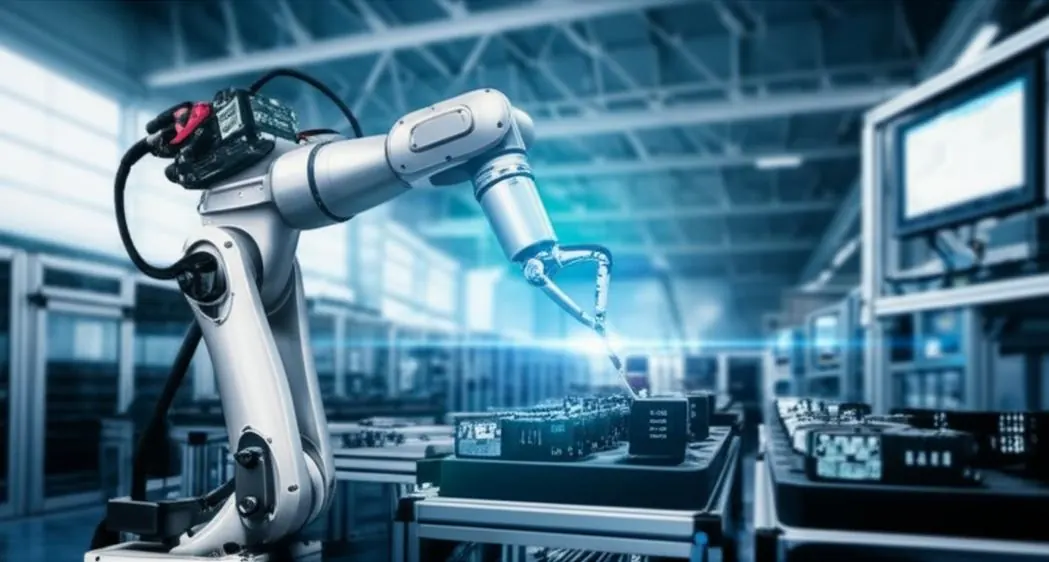
AI in Robotics: Revolutionizing Industries Artificial Intelligence (AI) is rapidly transforming various aspects of our lives, and one of the \[…\]
AI in Robotics: Revolutionizing Industries
Artificial Intelligence (AI) is rapidly transforming various aspects of our lives, and one of the most exciting applications is in robotics. AI empowers robots to perform tasks autonomously, adapt to changing environments, and even learn from experience. This combination of AI and robotics is driving innovation across numerous industries, leading to increased efficiency, improved safety, and new possibilities.
What is AI in Robotics?
AI in robotics refers to the integration of artificial intelligence algorithms and techniques into robotic systems. This enables robots to perceive their surroundings, reason about the information they gather, make decisions, and act upon those decisions in a smart and autonomous manner. Unlike traditional robots that are pre-programmed to perform specific tasks, AI-powered robots can handle complex and unpredictable situations.
Who benefits from AI in robotics? Industries like manufacturing, healthcare, logistics, agriculture, and even space exploration are seeing significant advantages.
What are the key components? These include sensors, actuators, AI algorithms (machine learning, computer vision, natural language processing), and control systems.
Where is it being used? Factories, hospitals, warehouses, farms, and research labs are just a few examples.
When did this trend start? While robotics has been around for decades, the integration of advanced AI has accelerated rapidly in the last 10-15 years.
Why is it important? Because it leads to increased efficiency, reduced costs, improved safety, and new possibilities for automation.
How does it work? Robots use sensors to collect data about their environment. AI algorithms process this data to understand the surroundings and make decisions. Actuators then carry out those decisions.
Key Applications of AI in Robotics
AI in robotics has a wide range of applications across various sectors:
- Manufacturing: AI-powered robots are used for tasks such as assembly, welding, painting, and quality control. They can work continuously without fatigue, improve precision, and reduce human error. For example, BMW uses robots with AI vision to inspect car parts with greater accuracy and speed. (Source: https://www.bmwgroup.com/en/innovation/artificial-intelligence.html)
- Healthcare: Robots assist surgeons with complex procedures, deliver medications, and provide companionship to patients. AI algorithms can analyze medical images to detect diseases earlier and more accurately. The da Vinci Surgical System is a prime example of AI-assisted surgery. (Source: https://www.intuitive.com/en-us/products-and-services/da-vinci)
- Logistics: AI-powered robots automate warehouse operations, sort packages, and deliver goods. Self-driving vehicles and drones are also being used to optimize delivery routes and reduce transportation costs. Amazon uses robots extensively in its fulfillment centers to speed up order processing. (Source: Multiple reports on Amazon’s robotics and automation investments.)
- Agriculture: Robots monitor crop health, identify pests, and harvest crops. AI algorithms optimize irrigation and fertilization, leading to increased yields and reduced resource consumption. Companies like John Deere are developing AI-powered agricultural robots. (Source: https://www.deere.com/en/)
- Inspection and Maintenance: Robots equipped with AI can inspect infrastructure like bridges, pipelines, and power lines. They can identify defects, predict failures, and perform maintenance tasks in hazardous environments, reducing risks to human workers.
- Customer Service: AI-powered robots like Pepper from Softbank are being used in retail and hospitality to greet customers, provide information, and assist with purchases. These robots use natural language processing to understand customer inquiries and provide helpful responses.
Benefits of AI in Robotics
The adoption of AI in robotics offers numerous benefits:
- Increased Efficiency: Robots can work continuously without breaks, leading to higher productivity and reduced cycle times.
- Improved Accuracy: AI algorithms can improve the precision of robotic tasks, reducing errors and improving quality.
- Enhanced Safety: Robots can perform tasks in hazardous environments, protecting human workers from risks.
- Reduced Costs: Automation can reduce labor costs and improve resource utilization.
- Greater Flexibility: AI-powered robots can adapt to changing environments and handle a wider range of tasks.
- New Capabilities: AI enables robots to perform tasks that were previously impossible, such as complex problem-solving and decision-making.
Challenges of AI in Robotics
Despite the numerous benefits, there are also challenges associated with AI in robotics:
- High Initial Costs: Implementing AI-powered robotic systems can be expensive.
- Technical Complexity: Developing and maintaining AI algorithms requires specialized expertise.
- Data Requirements: AI algorithms require large amounts of data to train effectively.
- Ethical Concerns: Issues such as job displacement and bias in AI algorithms need to be addressed.
- Safety Concerns: Ensuring the safety of AI-powered robots in complex environments is crucial.
- Integration Challenges: Integrating AI with existing robotic systems can be complex and time-consuming.
Future Trends in AI Robotics
The field of AI in robotics is constantly evolving, and several key trends are shaping its future:
- More Sophisticated AI Algorithms: Advances in machine learning, deep learning, and reinforcement learning are leading to more powerful and versatile AI algorithms for robotics.
- Improved Sensor Technology: New sensors are providing robots with more detailed and accurate information about their surroundings.
- Greater Collaboration Between Humans and Robots: Collaborative robots (cobots) are designed to work alongside humans, assisting them with tasks and improving overall productivity.
- Increased Use of Cloud Computing: Cloud computing provides robots with access to vast amounts of data and processing power, enabling them to perform more complex tasks.
- Development of More Specialized Robots: Robots are being designed for specific applications, such as healthcare, agriculture, and logistics.
- Focus on Explainable AI (XAI): Efforts are being made to make AI algorithms more transparent and understandable, allowing humans to better understand how robots make decisions.
The Role of Ebiz Software
While not directly involved in the AI or robotics hardware itself, software like Ebiz can play a crucial role in managing and analyzing the data generated by these systems. For example:
- Data Analysis: Ebiz can be used to analyze data collected by robots to identify trends, optimize performance, and predict potential problems.
- Inventory Management: In warehouse settings, Ebiz can track inventory levels and coordinate with robotic systems to ensure efficient order fulfillment.
- Sales Data Integration: For robots used in retail, Ebiz can integrate sales data to provide insights into customer behavior and optimize product placement.
To learn more about how software solutions can enhance your business operations, visit our store: /cua-hang
Conclusion
AI in robotics is a rapidly growing field with the potential to transform numerous industries. By empowering robots with intelligence, we can automate tasks, improve efficiency, enhance safety, and create new possibilities. While there are challenges to overcome, the benefits of AI in robotics are undeniable, and its future is bright. As AI algorithms and robotic technologies continue to advance, we can expect to see even more innovative applications of AI-powered robots in the years to come.
5/5 - (82 bình chọn)